

Your Guide to Senior Dental Coverage in 2026
As you plan for a healthy retirement, have you considered how you'll handle dental bills if you need more than a routine cleaning? That's where many seniors get caught off guard. Original Medicare doesn't cover most routine dental care, and many people don't realize the gap until they need dentures, periodontal treatment, a crown, or implant work.
That gap matters because dental needs often become more complex with age. In a Tampa Bay practice, the pattern is familiar. Patients want to protect their health, keep trusted providers, and avoid surprises when treatment moves beyond preventive care. If sedation, oral surgery, implants, or dentures may be part of your future care, the right plan isn't just about the monthly premium. It's about how the plan handles major services, networks, waiting periods, and annual maximums.
This guide keeps the focus practical. You'll see what seniors find helpful, what tends to disappoint them, and which plans are worth a closer look. If you're also comparing medical coverage, it can help to find Georgia Medicare Advantage options and understand how bundled dental benefits differ from standalone dental insurance.
1. AARP Dental Insurance Plan Administered By Delta Dental

AARP Dental Insurance Plan administered by Delta Dental is one of the easier plans to recommend to retirees who want a familiar name and broad dentist access. That matters more than people think. If you split time between Florida and another state, or you don't want a narrow network to dictate your care, a large PPO footprint can remove a lot of friction.
The biggest advantage here is simplicity. AARP members can shop plan tiers designed for older adults, and the Delta Dental PPO and Premier network access gives this option a practical edge for seniors who don't want to rebuild their dental relationships from scratch.
Where It Fits Best
This plan tends to work well for seniors who want preventive care covered and also want some help with basic and major procedures. It's a straightforward fit for people who value national network access more than niche plan design.
A few trade-offs are worth saying plainly:
- Best for provider access: Delta's network breadth can make in-network care easier to find in Florida.
- Best for brand familiarity: Some seniors feel more comfortable buying through AARP because the enrollment path feels more guided.
- Less ideal for specialized expectations: If you're shopping mainly for extensive implant coverage, you still need to read the benefit summary carefully.
Practical rule: Never assume "major services included" means strong implant or denture coverage right away. Check waiting periods, annual maximums, and whether missing tooth limitations apply.
For retirees who recently lost employer coverage, this kind of plan can feel like a sensible next step. That transition is common. Research from the Health and Retirement Study found that in 2004, 70% of seniors over 65 had no dental coverage at all, compared with 35% of younger adults, and retirement status was a primary predictor of losing coverage among older adults in the National Library of Medicine analysis.
Practical Drawbacks
Enrollment requires AARP membership, so this isn't a pure direct-purchase option in the same way some competitors are. Premiums and annual maximums also vary by location and age, which means the plan that looks strong for one Tampa Bay household might look average for another.
If you're comparing insurance with self-pay options, Florida Special Care Dentistry also explains dental care without dental insurance, which is useful when a plan's limits don't line up with the treatment you need.
Visit AARP Dental Insurance through Delta Dental.
2. Humana Dental
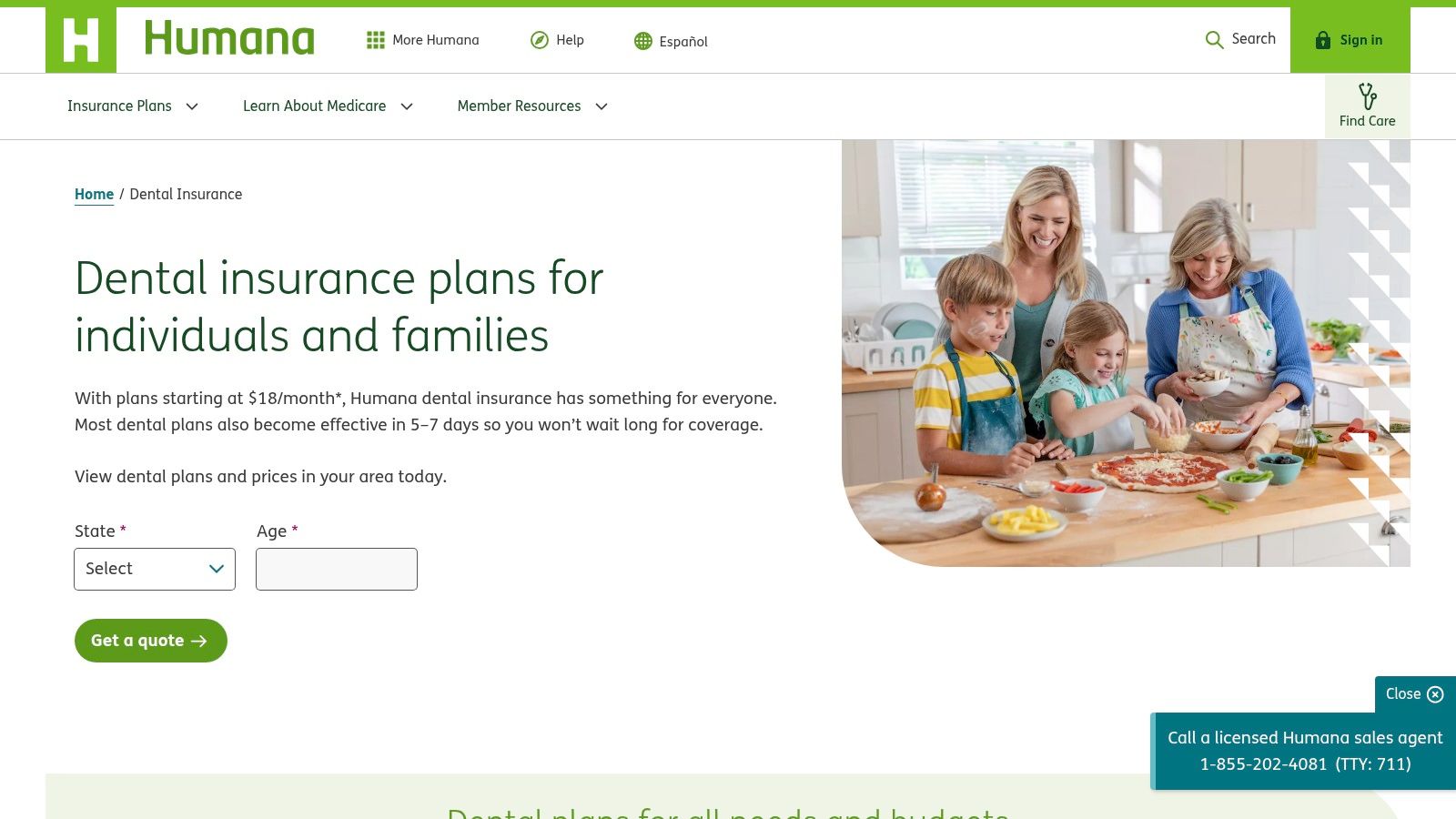
Humana Dental stands out for seniors who want choices instead of a single plan style. In Florida, that's useful because some patients want a PPO for flexibility, while others are comfortable with a prepaid or DHMO-style setup if it means more predictable fees.
Humana is also one of the first names many Medicare shoppers encounter when they start asking whether dental can be bundled with other benefits. That's not a small point. Traditional standalone dental works differently from Medicare Advantage dental, and seniors often mix the two concepts together.
Why Humana Gets Shortlisted
Humana offers multiple individual dental options, and in some markets it also offers dental-vision-hearing bundles. For a senior who wants one shopping process for several age-related needs, that's appealing.
This is the bigger coverage reality to keep in mind. On standard Medicare Parts A and B, dental coverage isn't included. Many Medicare Advantage plans offered by private insurers do include routine dental benefits, and approximately 60% of Medicare Advantage plans in 2024 offered some dental coverage, with average annual maximums ranging from $1,000 to $2,000 depending on carrier and region according to Humana's Medicare dental overview.
If you want dental bundled into your medical coverage, Medicare Advantage is usually the lane to investigate. If you want standalone dental, compare it as a separate purchase and don't assume the benefit structure will look the same.
Trade-Offs I'd Watch Closely
Humana's variety is its strength, but it can also create confusion. A PPO may let you keep more provider flexibility, while a prepaid or DHMO option may limit you to network dentists. That's fine if your dentist participates. It's frustrating if your preferred Tampa Bay office doesn't.
Humana is often a practical option for seniors who:
- Want bundled benefits: Dental, vision, and hearing in one package can simplify decisions.
- Need local comparison tools: Florida-specific brochures and plan documents make side-by-side review easier.
- Can wait for major work: Waiting periods often apply to basic and major services.
For preventive-focused patients, Humana can be a clean fit. For someone who already knows they need dentures, implant support, or periodontal treatment soon, the waiting period question becomes the first thing to resolve, not the second.
Visit Humana Dental insurance plans.
3. MetLife TakeAlong Dental

MetLife TakeAlong Dental is a strong candidate for seniors who hate having to start over every time life changes. The whole premise is portability. You can keep the plan if you move or if your work status changes, and that's more valuable in retirement than many shoppers expect.
A lot of retirees in Florida aren't fully stationary. Some move closer to family, some split time between states, and some want to know the plan can travel with them. MetLife speaks directly to that concern.
The Florida-Specific Advantage
MetLife offers nationwide PPO options, and in Florida it also offers a DHMO or managed-care option through SafeGuard. That distinction matters. A PPO usually gives more freedom, while a DHMO can make out-of-pocket costs easier to predict because copays are set in advance.
For seniors trying to budget around recurring treatment, predictable structure can be attractive. The nationwide average monthly cost for senior dental plans is also a useful frame here: DHMO plans averaged $13.83 per month and DPPO plans averaged $35.16 per month, with many plans covering 100% of preventive care, major treatment often dropping to 50% coverage, and annual maximums frequently capping insurer payouts at $2,000 per year in Guardian's summary of NADP data.
What Works And What Doesn't
MetLife does a good job publishing plan grids and waiting period details. That transparency helps seniors who want to compare options before they commit.
Here are the practical pros and cons:
- Strong match for snowbirds: Portability is a real benefit if you relocate or spend time outside Florida.
- Useful DHMO option in Florida: Set copays can feel more manageable than percentage-based coinsurance.
- Less ideal for unrestricted provider choice: The DHMO route means staying in-network and selecting a primary dentist.
Budget lens: If you expect only cleanings and exams, a lower-cost structure may work well. If you think you'll need multiple major procedures in one year, annual maximums become the pressure point.
For seniors shopping for the best dental insurance for seniors with an eye on consistency, MetLife TakeAlong Dental is easy to justify. Just make sure the plan type matches how you use dental care.
Visit MetLife TakeAlong Dental.
4. Cigna Healthcare

Cigna Healthcare is often a good fit for seniors who want to compare options quickly and don't mind reading the plan details. Its online quoting tools are easy to use, and the company also offers a dental discount plan for people who decide traditional insurance isn't the best match.
That second path deserves more attention than it gets. Not every senior benefits equally from insurance. If someone needs a predictable discount, wants to avoid some insurance complexity, or doesn't expect much covered major work, a discount model can sometimes be easier to live with than a low-maximum PPO.
Why Cigna Appeals To Careful Shoppers
Cigna does a nice job highlighting the decision points that matter most. Network participation, annual maximums, and coverage levels are exactly where seniors should focus.
Many buyers find this confusing: Original Medicare covers almost no routine dental care, and standalone plans don't always make it clear that Medicare Advantage is the only path to bundled dental benefits with more predictable integration into medical coverage. A related analysis also noted that individual dental plans commonly cover 100% of preventive care but only 50% of major care, leaving seniors exposed to substantial out-of-pocket costs for services like veneers and grafts in this Direct Benefits review.
Where Cigna Can Fall Short
Cigna's flexibility comes with the usual insurance caveats. Waiting periods and annual maximums are common on many PPO options, and benefits vary by state and county.
For seniors considering Cigna, I'd keep these points front and center:
- Best for comparison shoppers: Side-by-side plan review is one of Cigna's strengths.
- Useful if insurance may not be ideal: The dental discount alternative gives another path.
- Not a shortcut around limits: Plan summaries still need close reading before treatment starts.
If your likely needs are exams, cleanings, fillings, and occasional periodontal maintenance, Cigna can be a practical middle-ground choice. If you're planning sedation dentistry, oral surgery, or complex restorative work in Tampa Bay, confirm the benefit details with unusual care before enrolling.
Visit Cigna Dental insurance plans.
5. Guardian Direct

Guardian Direct is the plan I think of for seniors who want speed. If you're comfortable buying online and you don't want a long enrollment process, Guardian makes that part easy. You can compare tiers, enroll directly, and access plan materials without much friction.
That direct-purchase experience is useful for adult children helping parents, too. When families are trying to line up care quickly, a clean online process matters.
The Main Selling Point
Guardian's appeal isn't just convenience. It also highlights broad PPO access and next-month effective dates, which can help seniors who don't want to sit in limbo after making a decision.
There's another reason Guardian gets attention in senior plan roundups. Industry comparisons specifically highlighted "no waiting periods" for Guardian as an important benchmark in senior dental shopping, while also emphasizing that more than 1 in every 4 seniors had not visited a dentist in the last five years according to Delta Dental's senior dental insurance page. That combination tells you two things: seniors need timely access, and delayed care is still a real problem.
Clinical reality: The best dental insurance for seniors isn't always the cheapest. It's the plan that lets treatment happen before a manageable issue becomes a much bigger one.
Who Should Consider Guardian Direct
Guardian Direct makes the most sense for seniors who:
- Want fast enrollment: The process is simple and direct.
- Need broad provider choice: PPO network access helps.
- Prefer digital account tools: ID cards and plan information are easy to access online.
The cautions are familiar. Waiting periods and annual maximums often still apply on richer tiers, and orthodontic coverage on individual plans is usually limited. For seniors, orthodontics isn't the issue anyway. The bigger question is whether a plan will support crowns, dentures, root canals, periodontal therapy, or implant-related treatment without awkward delays.
Visit Guardian Direct dental insurance.
6. UnitedHealthcare And UnitedHealthOne Individual Dental

UnitedHealthOne Individual Dental works well for seniors who want a recognizable carrier and a tiered plan menu. That's a practical approach. Some retirees want a lower-cost plan built around preventive care, while others know they'll likely need more restorative support and are willing to pay for a richer design.
The plan brochures are one of the stronger features here. They tend to spell out coinsurance, waiting periods, and benefit progression clearly enough for a careful buyer to make a realistic comparison.
Why Tiered Plans Help Seniors
A tiered structure helps match coverage to expected needs. If you only want preventive care and some backup for minor work, one tier may be enough. If you're trying to anticipate crowns, dentures, or more involved treatment, another tier may fit better.
The market for dental insurance is expanding. The U.S. dental insurance market was valued at USD 6.76 Billion in 2024 and is projected to reach USD 11.28 Billion by 2032, growing at a CAGR of 6.60%, while Original Medicare generally excludes routine care such as cleanings, X-rays, fillings, and dentures based on Data Bridge Market Research. More choice is good, but more choice also means more room to buy the wrong thing.
The Limiting Factor
The issue with UnitedHealthOne is the same issue seen across many PPOs. Annual maximums can blunt the value of the plan if a senior needs a lot of work in a single year.
That doesn't make it a poor option. It just makes it a plan you should buy with honest expectations.
- Good for staged treatment: If care can be spread over time, a tiered PPO can make sense.
- Good for brand comfort: UnitedHealthcare is recognizable to many Medicare-age shoppers.
- Less ideal for concentrated major work: One busy treatment year can push you against the plan's limit quickly.
For seniors in Tampa Bay considering dentures, extractions, implant planning, or sedation-assisted care, timing matters almost as much as benefits. If treatment can wait and be phased, this type of plan can work better than it first appears.
Visit UnitedHealthOne individual insurance options.
7. Physicians Mutual
Physicians Mutual often appeals to seniors for one simple reason. It doesn't force the network issue in the same way many PPO or DHMO plans do. If you've seen the same dentist for years, or you spend parts of the year in different states, that flexibility can be reassuring.
For older adults, continuity has real value. Trust matters more when treatment gets more complex, anxiety is a factor, or sedation may be needed for comfort.
Why Dentist Freedom Matters
Physicians Mutual markets a "see any dentist" structure, and for some seniors that is the deciding feature. If changing offices would mean delaying treatment or restarting with a new clinician, freedom of choice can outweigh the savings that come from a tighter network.
That said, freedom isn't the same thing as best value in every case. Without a PPO network, negotiated fee savings may be more limited. You have to balance convenience and loyalty against the possibility of paying more than you would inside a contracted network.
Some seniors are happiest with the dentist they've trusted for years. Others save more by switching to an in-network office. Neither choice is wrong. The right choice depends on whether continuity or negotiated pricing matters more to you.
Best Use Case
Physicians Mutual is often strongest for retirees who travel, maintain long-term relationships with specific dentists, or don't want to be told where they can receive care. It also fits people who prefer straightforward mail or online enrollment.
Its trade-offs are clear:
- Best for provider freedom: You may not need to switch from a long-time dentist.
- Useful for multistate living: Travel or seasonal relocation is easier to manage.
- Still limited by plan design: Waiting periods and annual maximums can still apply.
Among the best dental insurance for seniors, this is one of the most practical choices for patients who value access over network optimization. For some people, that's the right call. For others, especially those facing several major procedures, a strong PPO may stretch dollars further.
Visit Physicians Mutual dental plans.
Best Dental Insurance for Seniors, 7-Plan Comparison
| Plan | Enrollment complexity | Network & requirements | Coverage & expected outcomes | Ideal use cases | Key advantages |
|---|---|---|---|---|---|
| AARP Dental Insurance Plan (Delta Dental) | Requires AARP membership; online enrollment; straightforward | Access to Delta Dental PPO & Premier; large national network; premiums vary by ZIP/age | Preventive covered; basic/major options; annual maximums vary by plan | Retirees seeking senior-focused branding and broad provider access | Very wide provider network; clear plan tiers; senior-oriented support |
| Humana Dental | State-dependent options; online quoting; variable waiting periods | PPO or prepaid/DHMO depending on state; DVH bundles available; county/state variability | Preventive often day one; basic/major may have waiting periods | Seniors wanting multiple plan types or bundled vision/hearing benefits | Large plan menu; DVH bundling; strong national brand and networks |
| MetLife TakeAlong Dental | Individual purchase with portable coverage; transparent plan grids | Nationwide PPO options; Florida DHMO via SafeGuard; waiting periods published | Defined coinsurance tiers; DHMO offers predictable copays; PPO waiting periods common | Seniors who relocate or value keeping coverage when moving | Portability of plan; clear benefit disclosure; Florida DHMO option |
| Cigna Dental | Simple online quoting and side-by-side comparisons | Large provider network; discount plan alternative; benefits vary by location | PPO plans with waiting periods and annual maximums common; discount plan lowers fees | Seniors who want easy plan comparison or a discount alternative | Strong online tools; network breadth; option for a dental discount plan |
| Guardian Direct (Guardian Life) | Fast online purchase; next-month effective dates and ID access | Large national PPO (139k+ dentists); multiple tier options; ZIP-dependent premiums | Preventive covered; richer tiers may have waiting periods and maxes | Seniors wanting quick enrollment and broad provider choice | Fast issuance and ID access; broad network; competitive premiums in many areas |
| UnitedHealthcare, UnitedHealthOne | Online quoting and brochures; tiered plan selection | National provider network; waiting periods and annual maximums typical | Preventive often covered immediately; tiered benefits with limits that may cap value | Seniors preferring a recognizable carrier and tiered benefit levels | Tiered plans to match budget/needs; recognizable carrier with ancillary options |
| Physicians Mutual | Simple mail or online enrollment | “See any dentist” design (no network lock-in); negotiable provider rates limited | Flexible dentist choice; annual maximums and waiting periods may still apply | Retirees who prioritize freedom to keep longtime or out-of-network dentists | Freedom to use any dentist; senior-focused plan levels; good for frequent travelers |
Making The Best Choice For Your Health And Budget
Choosing a dental plan is personal. The right answer depends on whether you mainly want preventive care, need help with periodontal treatment, or expect more extensive work like dentures, crowns, extractions, or implant-related care. Seniors in Tampa Bay also have to think about something national comparisons often miss. Whether a local office can deliver the treatment comfortably, especially if sedation or complex restorative work is part of the plan.
Start with the dentist, not the premium. Confirm that your preferred Tampa Bay provider is in-network if you're considering a PPO or DHMO. If you're comparing plans for treatment at Florida Special Care Dentistry, ask how the office works with your insurer, what estimate process is available before treatment, and whether your plan creates waiting period issues for major services.
If traditional insurance doesn't fit, ask about alternatives. Some practices, including Florida Special Care Dentistry, accept financing through partners like CareCredit or offer in-house discount arrangements that reduce fees for services. That can be especially helpful when insurance annual maximums are too low for the care you need.
This matters even more for seniors considering implants, full or partial dentures, oral surgery, or sedation-supported treatment. Insurance can help, but it rarely removes every out-of-pocket cost. A realistic financial plan usually combines insurance benefits, phased treatment, and a financing or discount option when needed.
The best move is to be proactive. Don't wait until a broken tooth, denture problem, or painful gum condition forces a rushed decision. Review your benefits before treatment starts, verify your network, and ask specific questions about annual maximums, waiting periods, and major service coverage.
Oral health is part of healthy aging. A good plan protects your budget, but the better outcome is that it helps you stay on schedule with the care that keeps eating, speaking, smiling, and socializing comfortable. If you're also thinking about overall wellness in retirement, it may help to explore gym options for older adults alongside your healthcare planning.
If you're in Tampa or St. Petersburg and want help making sense of dental benefits before starting treatment, Florida Special Care Dentistry can help. The team works with many major insurers, offers transparent financial options, and provides everything from preventive and periodontal care to dentures, implants, oral surgery, and advanced sedation for patients with anxiety, sensory sensitivities, or complex medical needs.